
Newsletter Subscribe
Enter your email address below and subscribe to our newsletter

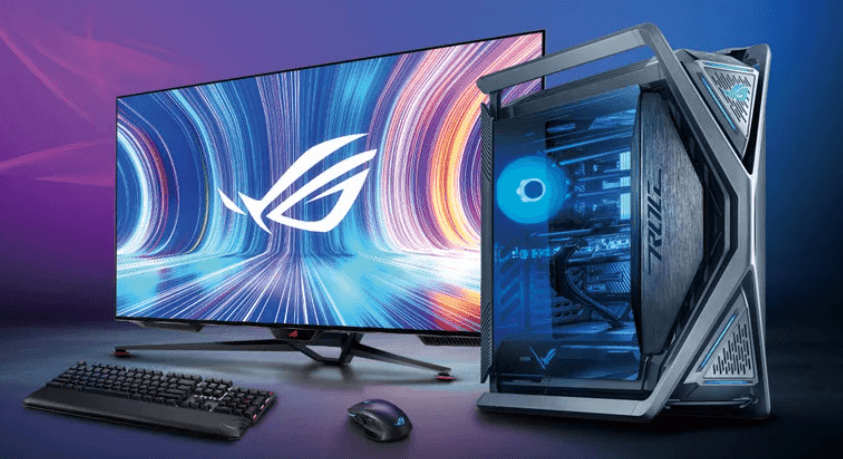
A desktop PC remains one of the most powerful and versatile computing solutions for home, business, education, gaming, and professional work. Unlike laptops, desktop computers offer greater performance, easier hardware upgrades, better cooling, and more customization options. Whether you’re browsing the internet, editing videos, developing software, or playing the latest games, a desktop PC can provide the speed and reliability needed for demanding tasks.
Modern desktop PCs feature powerful processors, high-speed storage, dedicated graphics cards, and advanced connectivity options. This guide explains what a desktop PC is, how it works, its key features, benefits, types, applications, challenges, and tips for choosing the right desktop computer.
A desktop PC (Personal Computer) is a computer designed to remain in a fixed location, such as a desk or workstation. Unlike laptops, desktop PCs usually consist of separate components, including a computer tower, monitor, keyboard, and mouse.
Desktop PCs are widely used for productivity, education, gaming, creative work, software development, and business operations because of their performance and flexibility.
The central processing unit (CPU) performs calculations and executes software instructions, making it one of the most important components of a desktop PC.
Random Access Memory (RAM) temporarily stores data used by active programs, allowing smooth multitasking and faster performance.
Desktop PCs use solid-state drives (SSDs), hard disk drives (HDDs), or a combination of both to store the operating system, applications, and personal files.
The graphics processing unit renders images, videos, games, and 3D content. Some desktop PCs include dedicated graphics cards for enhanced performance.
Desktop PCs run operating systems such as Windows, Linux, or other compatible platforms, providing the interface for managing hardware and software.
These systems are designed for web browsing, online learning, office work, streaming, and everyday computing.
Gaming desktops feature powerful processors, dedicated graphics cards, advanced cooling systems, and upgrade-friendly hardware.
Business systems prioritize reliability, security, and productivity for office environments and professional use.
Professional workstations are built for engineering, architecture, scientific computing, video editing, animation, and other demanding workloads.
All-in-one desktop computers combine the monitor and computer components into a single unit, reducing cable clutter and saving desk space.
Mini PCs provide compact computing solutions for offices, home entertainment, and light productivity tasks.
Desktop PCs often deliver better performance than similarly priced laptops because they have more space for powerful hardware and cooling systems.
Many desktop computers allow users to upgrade memory, storage, graphics cards, processors, and other components.
Larger cases support improved airflow and cooling, helping maintain stable performance during demanding workloads.
Desktop PCs often support multiple monitors, improving productivity and multitasking.
Most desktop computers include multiple USB ports, Ethernet, HDMI, DisplayPort, audio ports, Wi-Fi, and Bluetooth support.
Desktop PCs can efficiently handle demanding applications such as gaming, programming, video editing, and 3D rendering.
Users can build or upgrade desktop PCs based on their specific needs and budget.
Because components can often be upgraded individually, desktop PCs may remain useful for many years.
Separate monitors, keyboards, and mice allow users to create ergonomic workstations.
Desktop PCs often provide higher performance for the same budget compared to portable computers.
Students use desktop PCs for online learning, research, assignments, programming, and presentations.
Companies use desktop computers for accounting, communication, project management, customer support, and office productivity.
Gaming desktops deliver smooth gameplay, advanced graphics, and support for high-performance gaming accessories.
Developers use desktop PCs for programming, testing, compiling code, and managing development environments.
Creative professionals use desktop computers for photo editing, illustration, animation, and visual design.
Editors rely on desktop PCs for processing large video files, rendering projects, and producing multimedia content.
Several manufacturers produce desktop computers for different types of users.
Dell offers desktop computers for home users, businesses, gamers, and professional workstations.
HP provides reliable desktop PCs for education, productivity, entertainment, and enterprise environments.
Lenovo manufactures business desktops, home computers, workstations, and compact desktop solutions.
ASUS offers gaming desktops, creator systems, and productivity-focused computers.
Acer produces affordable desktop PCs suitable for home users, students, and small businesses.
Apple offers desktop computers designed for creative professionals, businesses, and everyday users within its ecosystem.
Desktop PCs are designed to remain in one location and are not convenient for travel.
A desktop computer requires dedicated desk space for the monitor, keyboard, mouse, and system unit.
Some high-performance desktop systems consume more electricity than lightweight laptops.
Most desktop PCs require separate monitors, keyboards, speakers, and other peripherals.
Choose a desktop computer based on whether you need it for work, gaming, education, creative projects, or everyday use.
Choose a processor that matches your workload and future performance needs.
At least 8 GB of RAM is suitable for basic computing, while 16 GB or more is recommended for gaming and professional applications.
An SSD improves startup speed, application loading, and overall system responsiveness.
Select a desktop that allows future upgrades for memory, storage, and graphics to extend its lifespan.
Desktop PCs deliver excellent computing power for demanding applications.
Many hardware components can be replaced or upgraded over time.
Better airflow helps maintain consistent performance during intensive workloads.
Desktop computers support a broad range of monitors, storage devices, accessories, and expansion cards.
A desktop PC is a personal computer designed for stationary use, typically consisting of a computer tower, monitor, keyboard, and mouse.
Desktop PCs generally offer better performance, upgradeability, and cooling, while laptops provide greater portability.
For everyday tasks, 8 GB of RAM is sufficient. For gaming, programming, video editing, and professional work, 16 GB or more is recommended.
Yes. Many desktop PCs allow users to upgrade RAM, storage, graphics cards, processors, and other components.
Desktop PCs are ideal for users who need powerful performance, long-term upgrade options, and a dedicated workstation for home, office, gaming, or creative work.
Desktop PCs continue to be one of the best computing solutions for users who prioritize performance, flexibility, and long-term value. With powerful processors, expandable hardware, advanced cooling, and support for demanding applications, they are suitable for students, professionals, gamers, and creative users alike. By evaluating your performance needs, budget, storage, memory, and upgrade requirements, you can choose a desktop PC that delivers reliable performance and excellent value for years to come.

